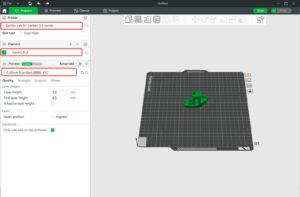



Bambu Lab is facing growing criticism from the maker community after quietly introducing a controversial change in Bambu Studio, its official slicing software. According to multiple reports and a GitHub issue opened by users, the software now completely disables the print button when certain non-official nozzles or abrasive filaments are detected, preventing users from starting a print at all.
The issue was first highlighted on GitHub, where users noticed that instead of displaying a warning or compatibility notice, Bambu Studio simply blocks printing, offering no workaround within the interface. For many, this represents a significant shift in how the company manages hardware and material compatibility – and one that raises concerns about user freedom and control.
A silent lock instead of a warning
Traditionally, slicers and firmware handle unsupported configurations by issuing alerts or disclaimers, leaving the final decision to the user. In this case, however, Bambu Studio reportedly removes the option to proceed entirely, disabling the print command when specific nozzle types or abrasive materials are selected.
This behavior affects users who rely on hardened steel or third-party nozzles, commonly used for carbon fiber, glass-filled, or other abrasive filaments. These materials are standard in advanced and professional 3D printing workflows, making the restriction particularly frustrating for experienced users.
What has amplified the backlash is the lack of transparency. There was no clear announcement, changelog entry, or in-app explanation detailing why the restriction was introduced, whether it is temporary, or if it can be overridden.
Community backlash and open-source concerns
The reaction from the community has been swift. On GitHub, users are calling on Bambu Lab to reconsider the decision, arguing that blocking functionality outright crosses a line, especially for devices marketed as high-performance and enthusiast-friendly.
Some users worry this could set a precedent for tighter ecosystem control, similar to what has happened in other tech sectors, where software restrictions limit hardware modification and third-party accessories. Others fear that future updates could further restrict materials, parts, or even print profiles unless they are officially approved.
Importantly, critics are not necessarily opposed to warnings or safety notices. The main point of contention is the lack of choice: instead of informing users of potential risks, the software enforces a hard stop.
Why Bambu Lab might have done it
While Bambu Lab has not issued an official statement at the time of writing, possible motivations include hardware protection, print quality assurance, or liability concerns related to abrasive materials and non-certified components. Abrasive filaments can accelerate wear on hotends and extruders, potentially leading to failures that manufacturers would rather avoid supporting.
Still, many argue that experienced users should be allowed to assume those risks themselves – especially when using hardware specifically designed for such materials.
What happens next
The GitHub issue remains active, with users encouraging others to leave feedback and request a change in approach. Whether Bambu Lab will respond by restoring user choice, adding warnings instead of blocks, or doubling down on the restriction remains to be seen.
For now, the situation highlights a growing tension in the 3D printing world: the balance between reliability, safety, and user freedom in increasingly closed ecosystems.